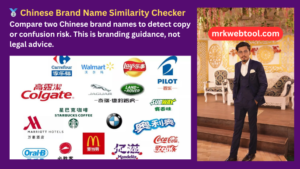
Chinese Brand Name Similarity Checker – Avoid Copy and Confusion Risks
Selecting a brand name for the Chinese market requires more than creativity. It demands clarity, distinction, and long-term protection. Many businesses struggle not because their products lack quality, but because their brand names are too similar to existing competitors or fail to stand out culturally.
The Chinese Brand Name Similarity Checker is built to prevent these issues early. By comparing two Chinese brand names side by side, the tool reveals potential confusion and duplication risks before you invest in branding, marketing, or trademark registration.
Why Brand Name Similarity Is a Serious Risk in China
Chinese is a character-based language where each symbol carries meaning, pronunciation, and visual identity. This creates a unique challenge: two names may appear different to non-native speakers but feel nearly identical to local consumers.
Brand confusion often occurs when:
- Names share key characters with strong meanings
- Pronunciations sound alike in Mandarin
- Structures follow the same rhythm or pattern
These overlaps can result in customer confusion, reduced brand trust, and even legal complications.
What the Chinese Brand Name Similarity Checker Analyzes
The Chinese Brand Name Similarity Checker goes beyond basic text comparison. It evaluates multiple real-world branding signals to reflect how names are actually perceived in the Chinese market.
Character Overlap
The tool identifies shared Chinese characters between two names. Even a single common character can create a strong mental connection, especially if it carries positive or widely recognized meaning.
Pronunciation Similarity
Names that sound similar in Mandarin can easily be confused in spoken communication, including advertising, customer support, and word-of-mouth marketing. The checker evaluates phonetic patterns to detect these risks.
Structural and Visual Similarity
Chinese brand names often follow consistent formats, such as two-character or three-character structures. When two names share similar length and rhythm, they may feel closely related, even if the characters differ.
Understanding the Similarity Score
The tool generates a similarity score ranging from 0 to 100:
- 0–30: Strong distinction, low similarity
- 31–70: Moderate overlap, potential concern
- 71–100: High similarity, increased confusion risk
This score acts as a decision-support indicator. It highlights potential issues early, allowing you to refine your branding strategy before making significant investments.
Confusion Risk Verdict Explained
Alongside the score, the Chinese Brand Name Similarity Checker provides a clear and actionable verdict:
- Low Confusion Risk – Names are distinct and unlikely to be confused
- Moderate Confusion Risk – Some similarities exist; further review recommended
- High Confusion Risk – Strong overlap; reconsideration is advised
This simplified classification helps communicate results effectively across teams, including non-technical stakeholders.
Important Note: Not Legal Advice
This tool is designed for branding guidance only. It does not replace official trademark searches or professional legal consultation.
Instead, it serves as an early-stage filter—helping you identify obvious risks before moving forward with legal processes, filings, or large-scale campaigns.
Who Should Use the Chinese Brand Name Similarity Checker
- Startup founders entering the Chinese market
- International companies localizing brand names
- Branding and naming agencies
- E-commerce sellers launching private labels
- Product teams comparing multiple naming options
How This Tool Fits Into a Smart Branding Workflow
An effective branding strategy involves multiple validation steps. The Chinese Brand Name Similarity Checker works best when combined with:
- Brand name popularity analysis
- Pronunciation safety checks
- Cultural meaning evaluation
Together, these steps ensure your brand name is unique, culturally appropriate, and market-ready.
Using Similarity Results to Make Better Decisions
A high similarity score is not a failure—it is a signal to refine your approach. You can:
- Modify one or more characters
- Adjust the name structure
- Explore alternative naming options
If the score is low, you gain confidence that your brand stands apart, supporting smoother registration and stronger market positioning.
Final Thoughts
Brand names are long-term strategic assets. In the Chinese market, similarity with existing brands can limit growth, create confusion, and weaken brand identity.
The Chinese Brand Name Similarity Checker provides a clear, human-readable way to evaluate these risks early. Use it as a proactive tool to protect your brand and build a strong foundation for success in China.
❓ Chinese Brand Name Similarity Checker – FAQs
What is a Chinese Brand Name Similarity Checker?
It is a tool that compares two Chinese brand names to identify visual, phonetic, and structural similarities that may cause confusion.
Why is brand name similarity risky in China?
Because Chinese characters combine meaning, sound, and visual form, making it easier for similar names to be perceived as identical.
How is the similarity score calculated?
The score is based on character overlap, pronunciation similarity, and structural patterns between the two names.
What does a high similarity score mean?
It indicates a strong likelihood that the names could be confused by consumers, requiring reconsideration.
Does this tool check trademarks?
No. It provides branding guidance only and does not replace legal trademark searches.
Can I use this tool for English brand names?
It is optimized for Chinese characters. Results for English names may not be accurate.
What should I do if similarity risk is high?
Consider modifying the name, changing characters, or exploring new alternatives to reduce overlap.
Is the Chinese Brand Name Similarity Checker free to use?
Yes, the tool is typically available for free as part of online branding resources.